

In a city where ‘coffee culture’ is perceived to be sacred, the arrival of Starbucks in Reykjavík might one day be seen as a pivotal moment in Iceland’s conversation about globalisation. Though likely not by Icelanders themselves.
Starbucks in Iceland. Those three words say plenty about the reach of global commerce.
Set to open tw0 stores downtown, the brand’s entry signals more than just corporate expansion into new territory. The Seattle-born mermaid brings with her a globalist symbol now familiar on city streets worldwide. But it’s a process that has played out on this island many times before, with only varying degrees of success.
Interestingly, the loudest objections seem to come not from Icelanders, but from foreign visitors who’ve grown attached to the capital’s small-scale charm.
One could argue though that their protests are based on an online myth about Icelandic coffee culture. An assumption that downtown Reykjavík represents the whole city. An image fuelled by their own nostalgia from once being here.
While these commenters see the idea of Starbucks in Iceland as offensive, even tragic, that sentiment hardly reflects the local mood.
Home brewed scene
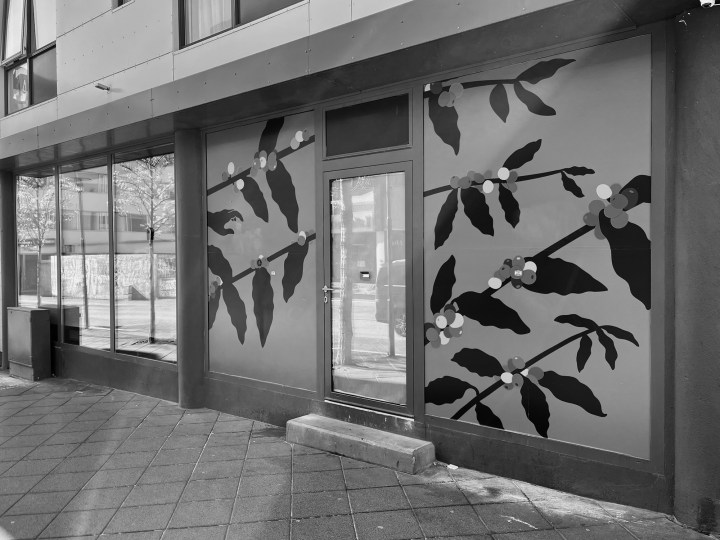
Reykjavík’s coffee scene is a source of pride for locals and a favourite talking point among visitors. Small, independent cafés with unique identities, serving meticulously crafted brews sourced from ethically-driven roasters, is seen to be the default by many overseas.
But even that perception isn’t entirely accurate. Kaffitar and Te & Kaffi, both popular Icelandic chains, are found throughout the Capital Region. The picture better fits Reykjavík’s old, architecturally unique 101 area, but chain coffee shops are a staple there too.
Reykjavík roast
There’s no escaping the fact that there is a kind of bemused practicality here. If it works, it stays. This is especially true of international brands that attempt to establish themselves on our shores.
Take Domino’s, Subway, and even Dunkin’ Donuts, which have all fought for a place in Icelandic culture. The first two succeeded enormously, but interestingly enough, Dunkin’ Donuts did not. The chain bakery also happened to set up on Laugavegur, back in 2015, attracting Icelanders from across the country, and causing enormous queues down the street.
But the novelty did not last. Dunkin’ Donuts’ Laugavegur premises could not make enough profit to pay for the hefty rent, later shutting down to little fanfare. Their last outlet in Iceland, in Kringlan mall, closed shop in 2019. I’ve not heard of anyone missing it, particularly.
Among many here, it would appear as though the presence of global chains has nothing to do with a moral stance. Nor are large companies typically viewed as threats to Icelandic culture. Rather, their place in society is simply a matter of taste, cost, and convenience.
Sometimes, people forget that McDonald’s didn’t vanish from Iceland in a blaze of local pride. It simply became too expensive to operate effectively. Ever since then, media outlets and tourist sites have spoken of it the way one might speak of an ex-lover: fondly, sometimes bitterly, but always as if the break up was their idea.
(People are also quick to forget that McDonald’s golden arches were almost immediately replaced by the Icelandic-owned Metro, which sells practically the same burgers under a new flag.)
All this is to say that anti-globalisation sentiment is not something particularly present in Iceland, regardless of how outsiders wish it was so.
Remember, we look out at the world from an isolated island. Scavenging the coastline for riches, what was once called rek, is practically woven into the Icelandic DNA. In times of hardship, whole houses, furniture, even sacred icons, washed ashore in the form of driftwood, and occasionally, life itself came bobbing in on the tide. Merchant ships wrecked, whales beached, and we made do.
Coastal life is, and was always, built on what the sea chose to offer. So is it any wonder we still feel a thrill when something shiny and new makes landfall, even if it arrives by cargo ship and not squall?
Corporate giants are sometimes even glorified in pop culture, a trend that seems uniquely Icelandic. I can think of no other reason why this is the case save for it being the local method of expressing gratitude for being noticed. Only, that gratitude is often perceived to be a declaration of loyalty. A collective agreement that Iceland does not want to be left behind.
Nowadays, it is increasingly difficult to avoid the influence of major players like Starbucks, and even more difficult to have the desire to. They bring with them a streamlined experience, focused on speed and replicability, that is hard to argue with, and easy to be sucked in by.
But does it have charm? The reality is that Starbucks won’t replace Reykjavík’s coffee scene, but it will pressure independents to stay sharp. If it sticks around, it’ll simply be another option; a familiar, fast, and famous one.
What’s really at stake?
Most Reykjavíkingar would consider news of Starbucks’ arrival as a lot of fuss about nothing. A corporate caffeine-monger as sleek and well-oiled as Starbucks will have little trouble settling into a city that often flirts with the idea of being metropolitan, even if its bones still feel provincial.
But there is a legitimate concern that might be worth voicing, especially considering the fact that Reykjavík is Iceland’s one shot at a modern international city.
We need only to look to the United Kingdom, Iceland’s close neighbour, where high streets have gradually morphed into near-identical strips of chain stores and café clones. Outdoor shopping malls in all but name.
Based on these realities, 101 residents might want to temper their enthusiasm for global chains, knowing that it cannot be eradicated completely. But Reykjavík is Iceland’s only true urban environment, drawing its charm from its independence and unique character. These are the very qualities that make it appealing to visitors in the first place, and Reykjavík relies on visitors to keep the light on.

Iceland won’t get a second chance to shape the face of its capital. Homogeny happens in a such a way as to be largely unnoticeable at first. Dare I say, it happens drip by drip. But a lot of drips make a full glass.
Before you know it, Reykjavík’s cutesy downtown might as well be anywhere else; a strange result to come to considering the large portions of the city that tourists never visit. But that hypothetical endpoint, that unsaid global acceptance of being part of the gang, is what I suspect some Icelanders secretly crave.
Naturally, there are shades of grey to the globalist argument. Many others here are of the opposite opinion, and there would be few cafe owners openly glad to see Starbucks opening its door downtown. Frankly, in a country where local businesses are entangled with local identity, it’s unsurprising that some might feel as though they are being encroached upon by a corporate giant.
A Tall Order
It would be a mistake to think that downtown residents have a strong resistance to Starbucks’ arrival.
But if there is, indeed, a local spirit, it might be worth observing how easily it can be influenced by global tides. Such a thing would require Reykjavíkingar to remain vigilant; to see beyond the same-old storefronts, and protect the unique qualities that lie beneath when threatened.
Resisting the inevitable will do Reykjavík’s cafés no good. Inevitability is inevitable, after all.
But responding with character and genuine pride for their place in the city might provide local residents a better reason to stay. They must now do what Starbucks never can: offer something that it is unmistakably theirs, and worth choosing.

 Reykjavík City Journal