
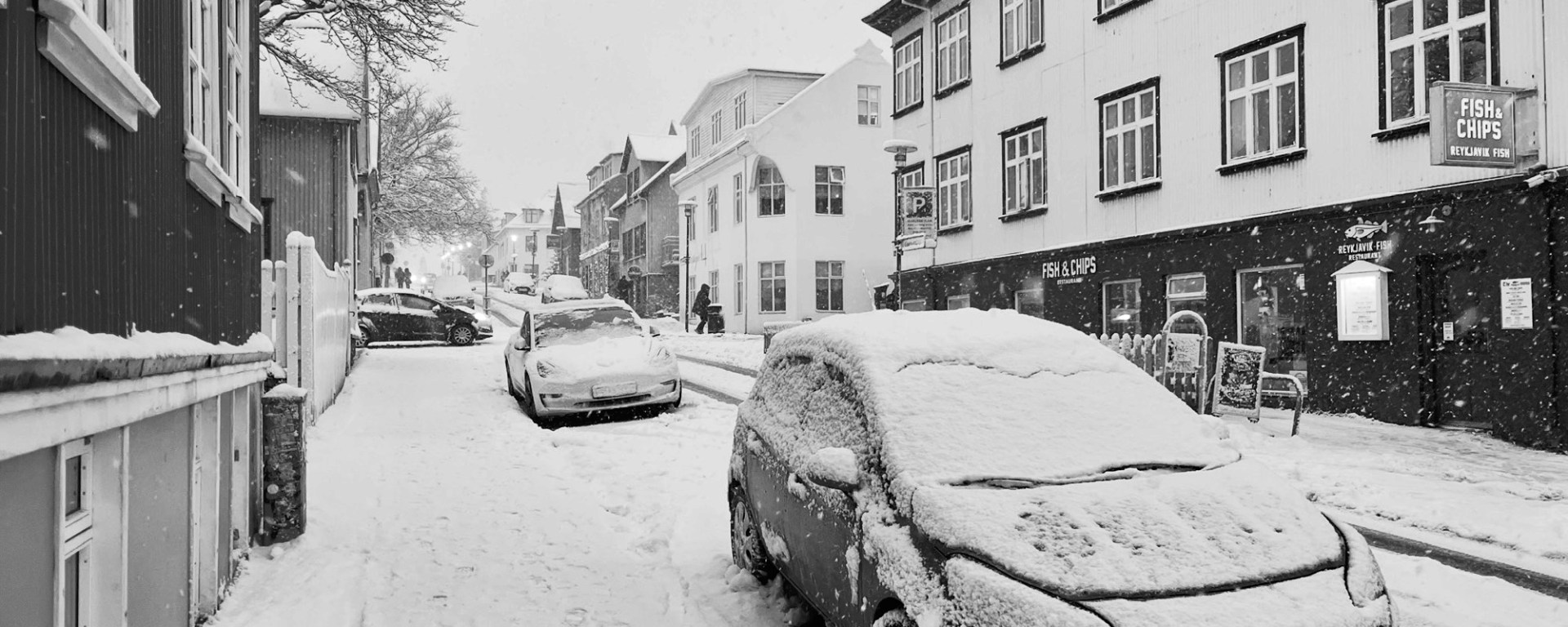
Starting out as a scattering of turf houses on the untamed shores of Faxaflói Bay, Reykjavík has slowly transformed into a lively, modern capital.
Today, Iceland’s largest city is home to two-thirds of the country’s population. Though small and isolated, it’s certainly a place worth visiting, no less learning more about.
Settlement and Smoke
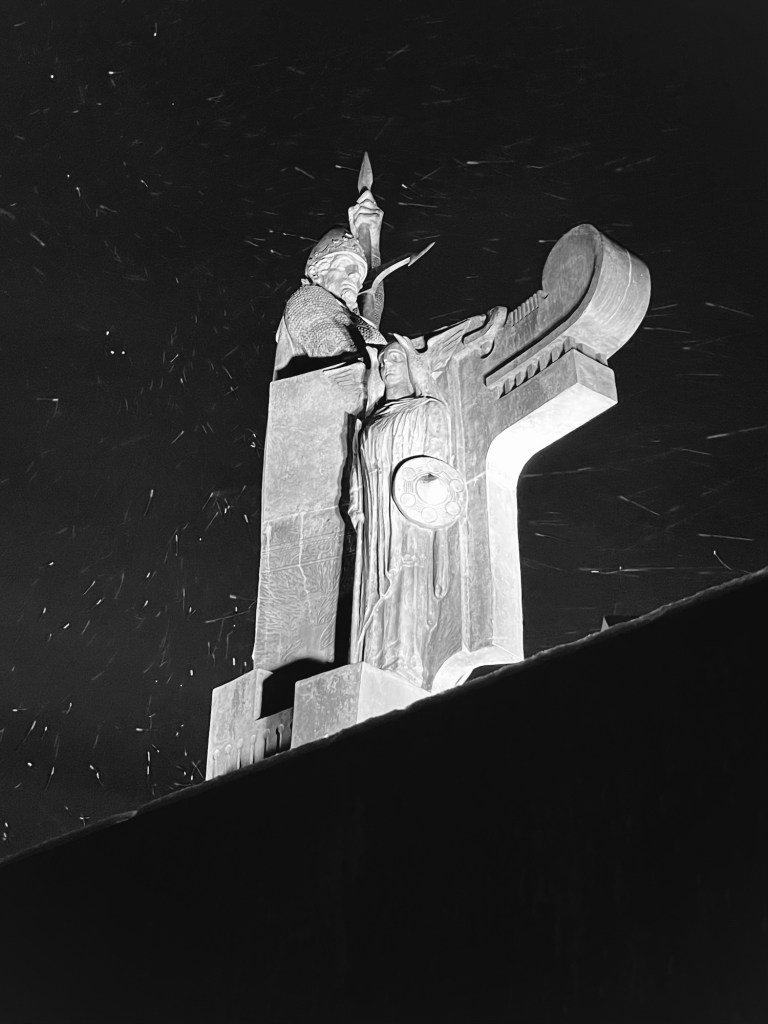
The story of Reykjavík begins with Iceland’s first permanent settler, Ingólfur Arnarson. You’ll find a statue of him at the hill, Arnarhóll, which serves as something of a centre-piece in the downtown area.
According to the Landnámabók (The Book of Settlements,) Ingólfur arrived in 874 AD, driven by exile from his native Norway. As was tradition then, he cast his high-seat pillars – large logs, for all intents and purposes – into the sea, vowing to settle wherever they washed ashore.
That happened to be a steamy bay, surrounded by simmering hot springs, in sight of a grand tabletop mountain that would later be called Esja.
He named the landing spot Reykjavík. “Bay of Smoke”.
For centuries, Reykjavík was little more than a working farmstead. In fact, it might surprise you to learn that while other regions of Iceland developed small fishing villages, trade posts, and religious centres, Reykjavík remained relatively quiet by comparison.
However, its location near fertile land and warm springs still made it desirable for agriculture. But its urban potential would lie dormant for nearly a thousand years.
Danish Influence and Urban Beginnings
The first real turning point in Reykjavík’s development came in the 18th century.
In 1752, a wealthy Danish merchant named Skúli Magnússon—often referred to as the father of Reykjavík—saw potential in the area.
As the royal treasurer and a man of significant influence, Skúli founded several industrial enterprises in Reykjavík, including a wool workshop, tannery, and a rope-making factory. These efforts were part of a broader plan to modernise and industrialise Iceland’s economy, which until then had been deeply rural and subsistence-based.
Though these factories were short-lived, they laid the groundwork for Reykjavík’s development. The 1786 granting of a trading charter marked Reykjavík’s official founding as a town, one of just six in Iceland at the time.
Still, compared to standards elsewhere, progress was slow. By the mid-19th century, Reykjavík was little more than a small village of only a few hundred residents.
The Centre of Independence
Come the 19th century, Reykjavík began to establish itself as the heart of political and cultural life in Iceland.
It was here that nationalism stirred among the Icelandic people, who sought independence from Danish rule. Reykjavík became the focal point for this movement.
The Alþingi, Iceland’s ancient parliament, had been dissolved in the 1800s but was reinstated as a consultative body in 1845, convening in Reykjavík. Though symbolic at first, its revival cemented the city’s role as the capital of Icelandic governance.
Simultaneously, the city became a hub for Icelandic literature and intellectual life. Writers, poets, and scholars flocked to Reykjavík, contributing to the growing sense of national identity. Newspapers and journals circulated ideas about independence, language preservation, and cultural pride.
The 20th Century Boom
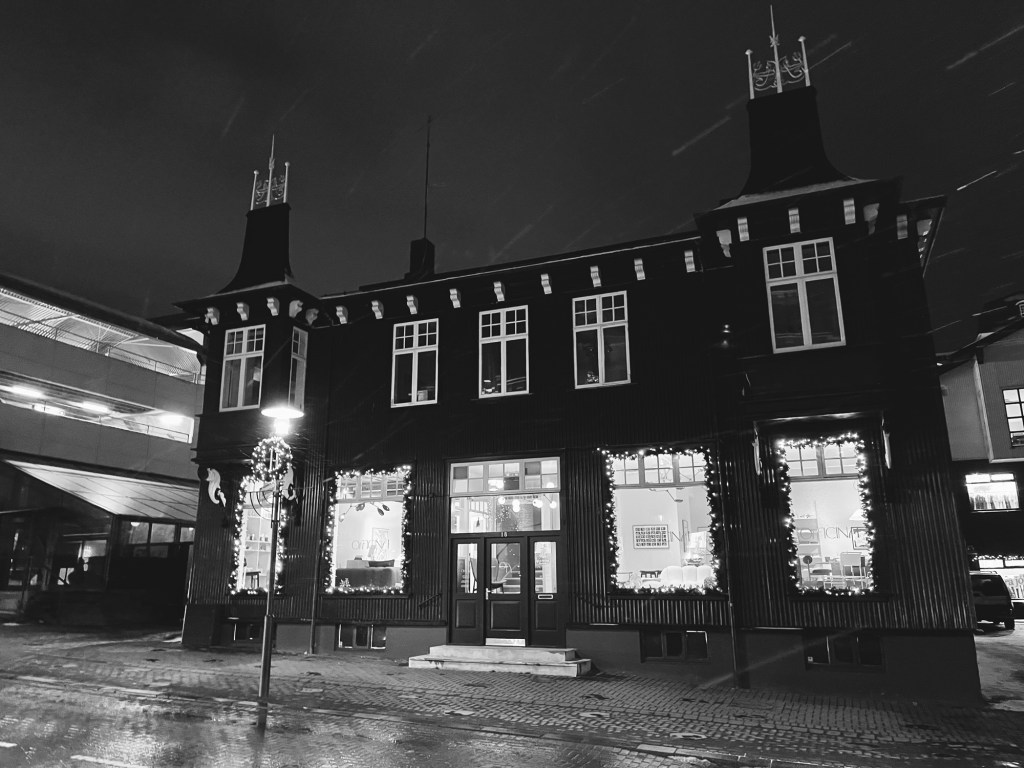
Reykjavík’s transformation into a true city didn’t occur until the 20th century.
The population grew rapidly, from around 6,000 in 1901 to over 30,000 by 1940. Key infrastructure was developed: roads, electricity, a water system, and a growing harbour, allowing Reykjavík to expand its trade and fishing industries.
World War II marked a dramatic turning point. Although Iceland declared neutrality, British and later American forces occupied Reykjavík to prevent Nazi expansion into the North Atlantic.
The presence of foreign troops brought sudden changes: paved roads, new buildings, and an economic boost. The occupation also brought cultural shifts—American jazz records, Coca-Cola, and a taste for the outside world.
In 1944, Iceland declared full independence from Denmark, and Reykjavík became the official capital of the newly established Republic of Iceland. From that point on, the city grew with confidence.
Post-War Modernisation
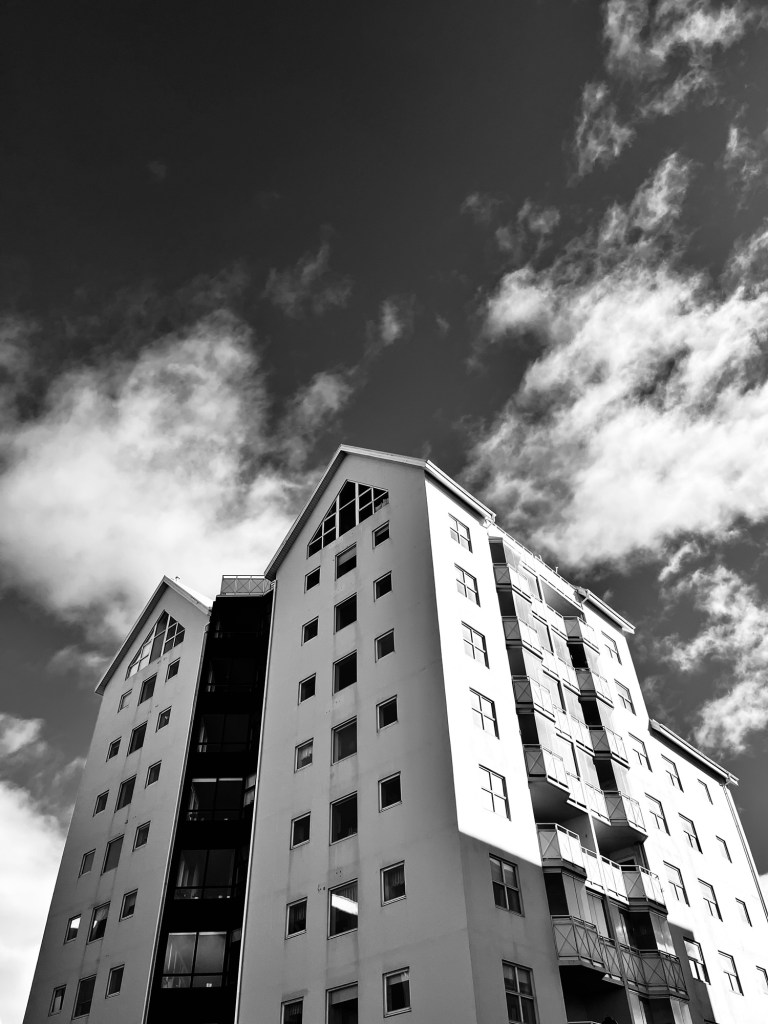
The post-war years were a time of optimism and rapid growth. Modern apartment blocks replaced turf houses, and Reykjavík developed its own suburbs.
The population swelled, leading to the creation of new districts and infrastructure. The 1960s and 70s saw increasing car ownership, suburbanisation, and a shift away from traditional industries to services and public sector jobs.
But Reykjavík’s modernisation wasn’t purely physical. It also became a cultural force.
The city’s music, literature, and art scenes flourished. Paintings and songs, deeply influenced by the geographical isolation and long winters. Musicians like Björk and Sigur Rós emerged from Reykjavík’s underground to global acclaim, giving the city a distinctive place in international pop culture.
A Political Stage
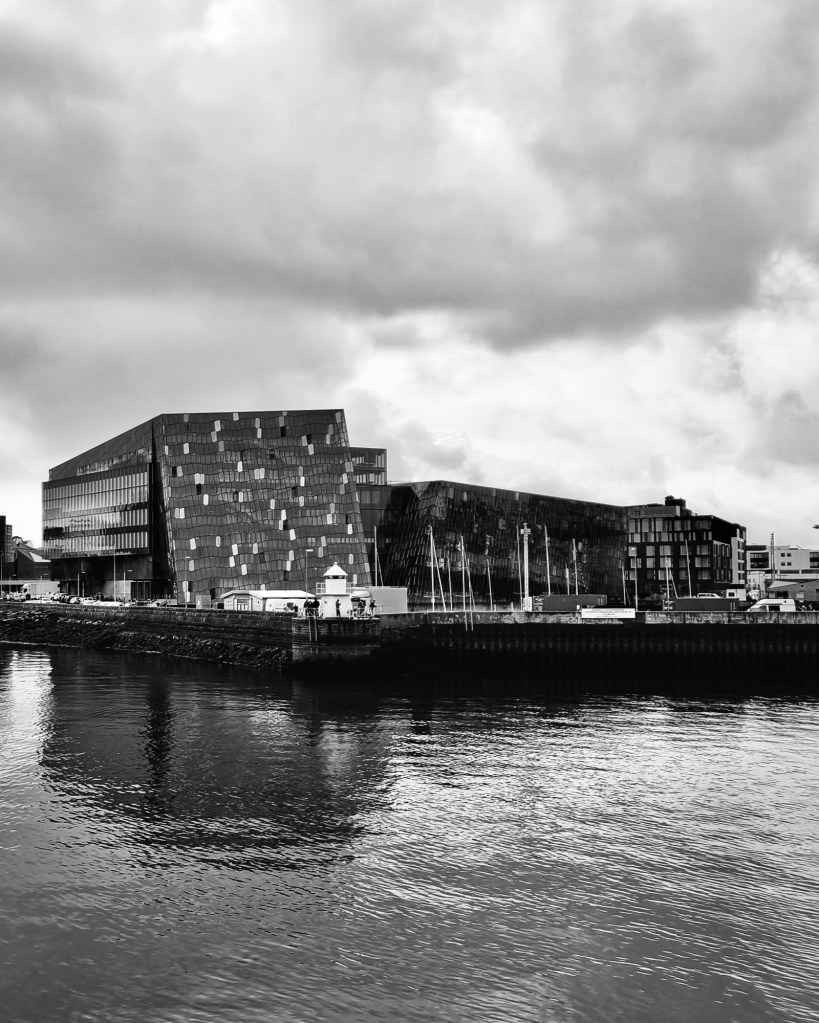
Despite its small size, Reykjavík has occasionally played a large role on the global stage.
In 1986, the city hosted a historic summit between US President Ronald Reagan and Soviet leader Mikhail Gorbachev at Höfði House. It was a time of immense global conflict, and though the talks broke down, they laid the groundwork for future nuclear disarmament agreements.
In that moment, in the space of a meeting, Reykjavík briefly became the centre of the geopolitical world.
Domestically, the city has long been the seat of political power and protest. Austurvöllur square, in front of the Alþingi parliament building, has seen countless anti-government and women’s rights demonstrations. .
Crisis and Reinvention
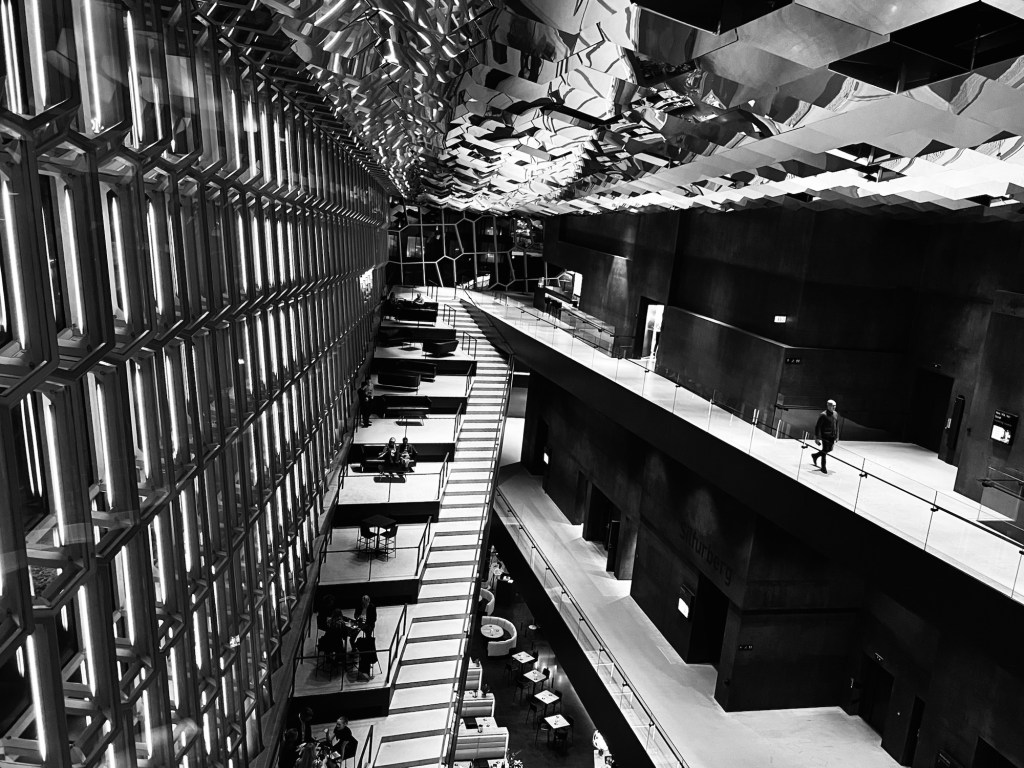
The financial crash of 2008 hit Reykjavík hard. In fact, Icelandic banks based in Reykjavík would later be held responsible for their part in the global economies collapse.
In the months that followed, banks closed their doors, unemployment spiked, and many residents took to the streets in anger. And yet, out of crisis came a new chapter. Reykjavík reinvented itself as a resilient city, embracing tourism, green energy, and innovation.
Neighbourhoods like Grandi transformed from industrial docks to artsy hotspots. Cafés, galleries, and boutiques popped up in former residencies and government buildings, attracting locals and travellers for the chance to partake in this new vision of the country.
At the same time, Reykjavík embraced sustainable development, with much of the city now powered by geothermal and hydroelectric energy.
Today’s Reykjavík
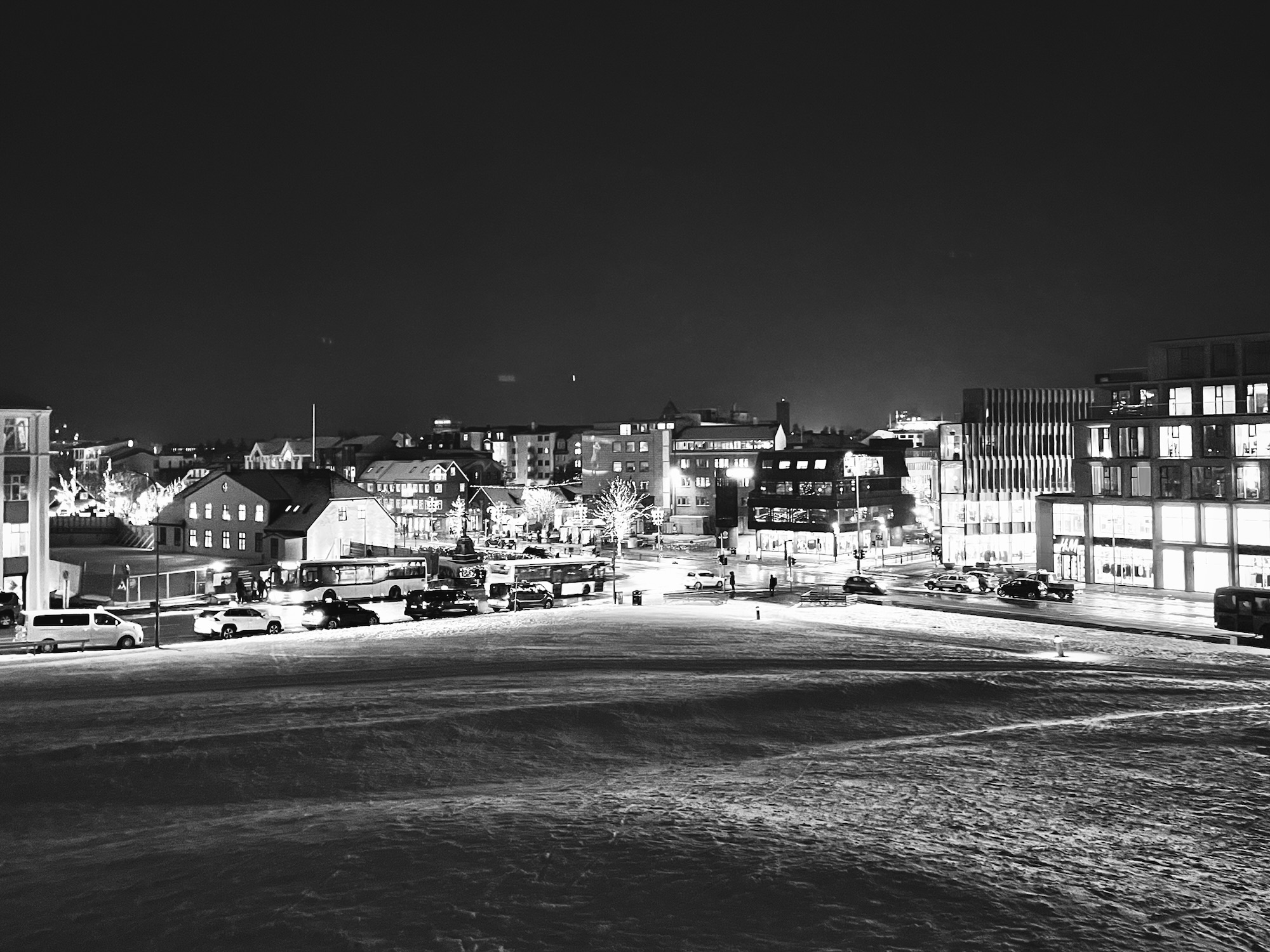
Reykjavík today is a city of contrasts. In many ways, it suffers from an identity crisis.
It’s compact, walkable, peaceful. At the same time, traffic-reliant, oddly industrial, and often unkempt.
Colourful corrugated iron houses sit next to sleek, modern buildings. The boundaries between street art and vandalism are vague. Poetry, history, and the modern era meet on every corner.
Despite its contradictions, Reykjavík remains Iceland’s cultural capital. The city hosts annual events such as the Reykjavík Arts Festival, Airwaves music festival, and the Icelandic Literature Festival.
It’s also staggeringly international, with a growing number of immigrants making the city their home, and a slowly dimming stream of tourists adding to the local wildlife.
Through it all, the spirit of Reykjavík remains unchanged. City residents pride themselves on their independence, creativity, and quiet strength.

 Reykjavík City Journal